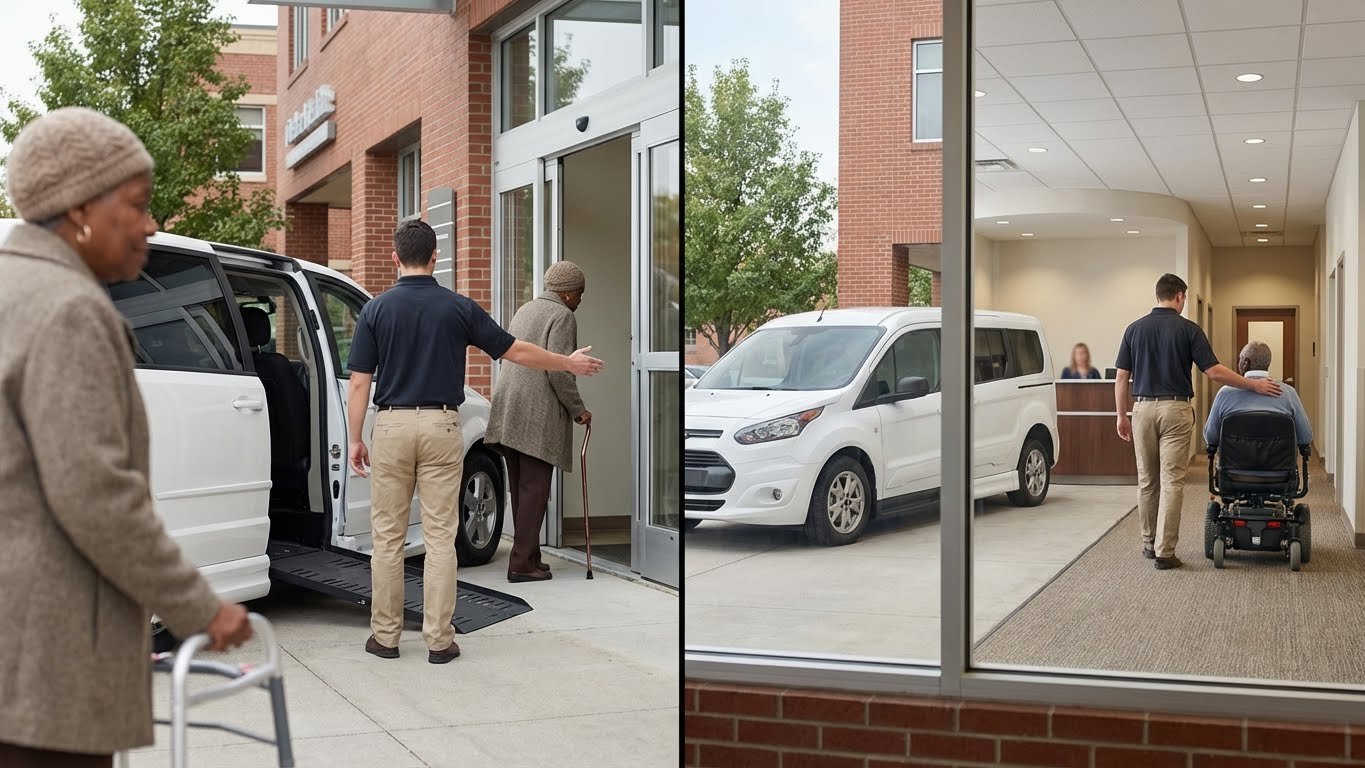
Introduction: The Importance of Wheelchair Transportation
For individuals who rely on wheelchairs, transportation is more than just a way to get from point A to point B—it is about safety, dignity, and independence. Standard vehicles, rideshares, or taxis are rarely equipped to handle wheelchairs properly, which can create risks during boarding, transport, and drop-off. Improper handling can lead to falls, injuries, and increased anxiety for patients and families.
In Omaha, professional wheelchair transportation services are an essential part of medical and senior care. These services, often provided through Non-Emergency Medical Transportation (NEMT) providers, ensure patients travel safely, comfortably, and on time, while reducing the physical and emotional strain on caregivers.
At Rhino Medical Transportation, we provide reliable wheelchair transportation across Medical Transportation Omaha Little Italy, Omaha Medical Transport Old Town, Senior Transportation Omaha Blackstone District, Senior Transportation Services Omaha Benson, Non-Emergency Medical Transportation Omaha Aksarben Village, and Wheelchair Transportation Omaha Dundee.
What Is Wheelchair Transportation?
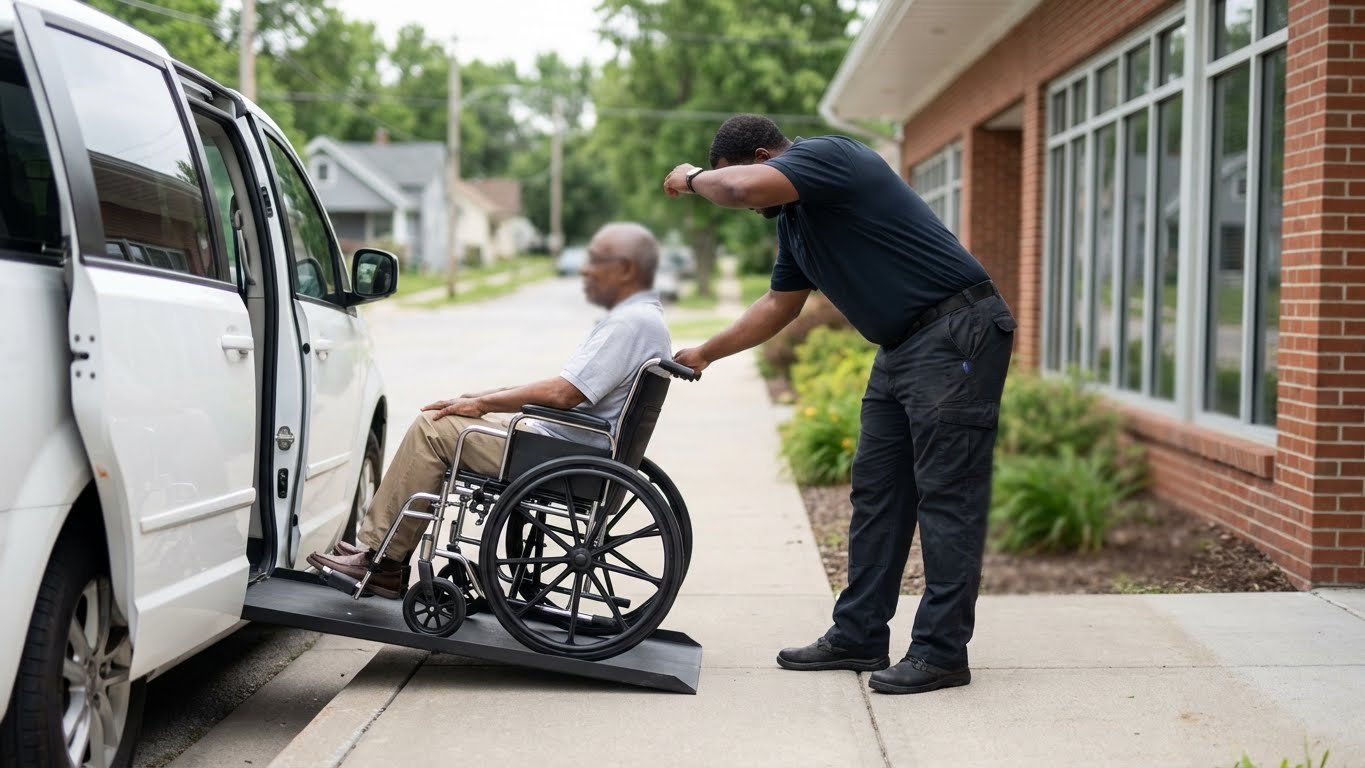
Wheelchair transportation is a specialized form of medical transportation for individuals who cannot safely transfer from their wheelchair into a standard vehicle. Unlike traditional transport options, wheelchair transportation focuses on accessibility, security, and comfort.
Features of Professional Wheelchair Transportation
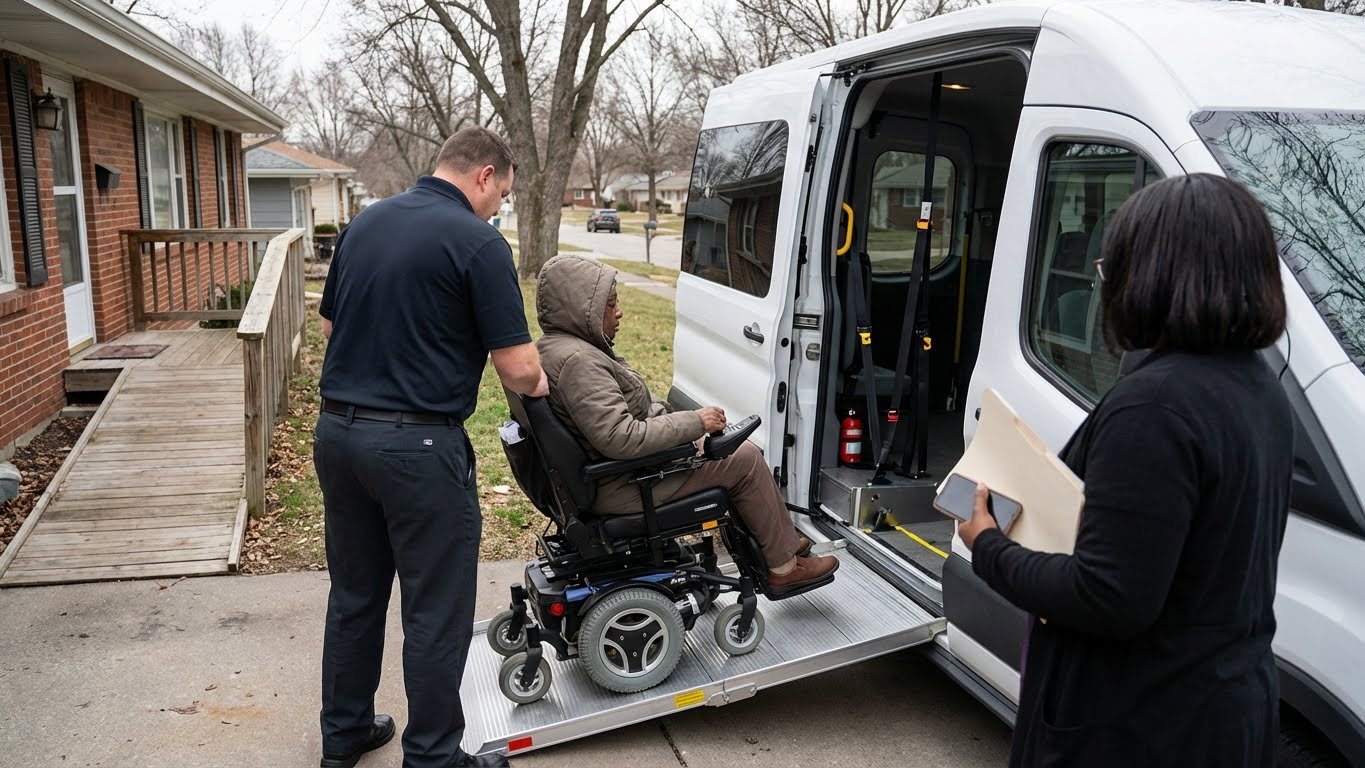
- Wheelchair-accessible vehicles: Vehicles designed with ramps or hydraulic lifts.
- ADA-compliant transport: Meets all standards for accessibility and mobility assistance.
- Secure wheelchair tie-downs: Ensures patients remain stable during transit.
- Trained drivers: Professionals skilled in safe transfers and patient care.
- Comfortable interiors: Climate-controlled cabins with enough space for mobility devices.
These features make wheelchair transportation safe for seniors, patients recovering from surgery, and individuals with mobility challenges.
Who Benefits From Wheelchair Transportation?
Wheelchair transportation is not limited to a single group of patients. It is designed to accommodate anyone who requires assistance while traveling for medical, social, or personal reasons.
Seniors With Limited Mobility
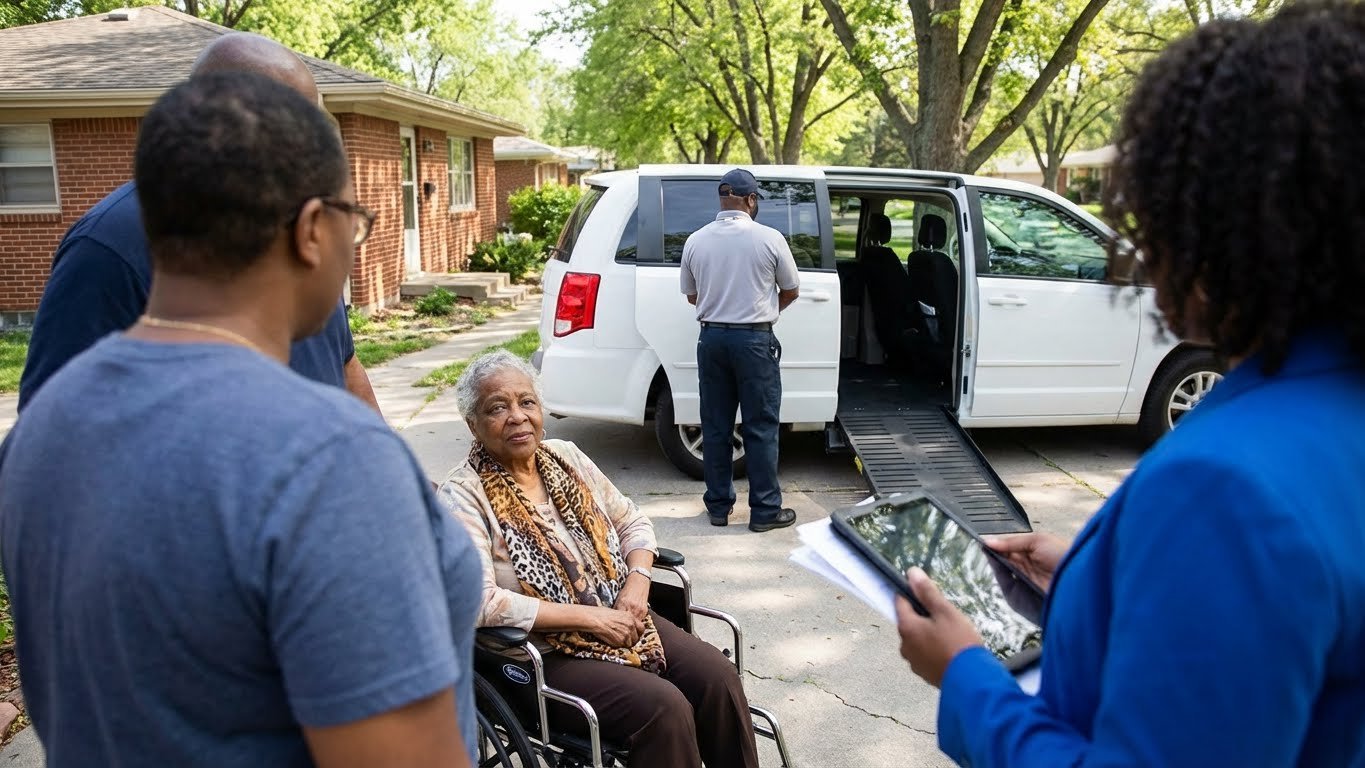
Aging often brings reduced strength, balance issues, and joint pain, which make standard transportation risky. Wheelchair transportation allows seniors to remain seated securely while attending medical appointments, social events, or therapy sessions.
Key benefits for seniors:
- Safe, comfortable transport without risk of falls.
- Reduced fatigue and stress during trips.
- Maintains independence while attending appointments.
Patients With Disabilities
Individuals with physical disabilities often depend on wheelchairs for daily mobility. Standard rideshares and taxis rarely provide adequate support or accessibility. Wheelchair transportation ensures ADA-compliant travel, trained assistance, and consistent scheduling.
Post-Surgery and Recovery Patients
After surgery or hospitalization, many patients temporarily require wheelchair transport. Professional services provide safe transfers for follow-up visits, physical therapy, or rehabilitation appointments.
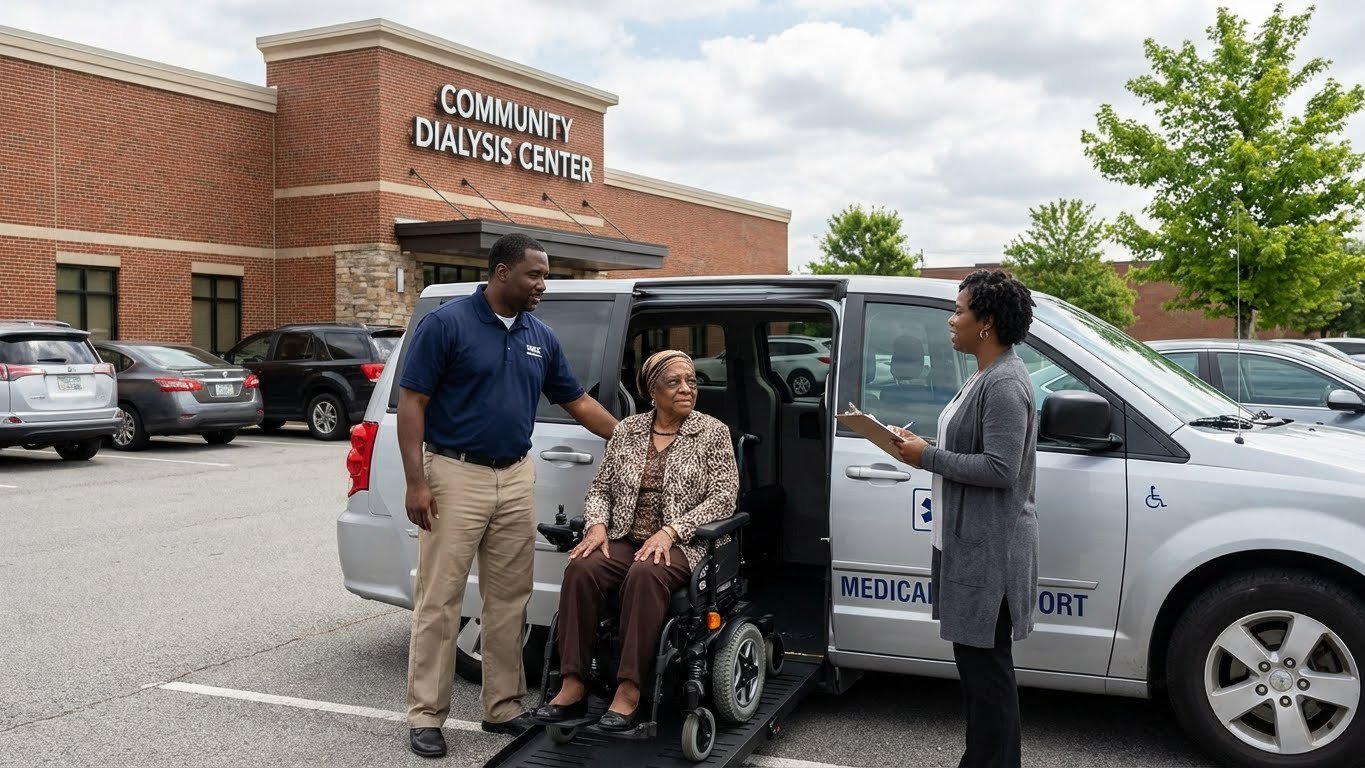
Dialysis and Chronic Care Patients
Dialysis patients often experience post-treatment fatigue, dizziness, or weakness. Wheelchair transportation ensures they travel safely to and from treatment centers without risking injury.
Patients Traveling Alone
For individuals who live alone or whose caregivers cannot accompany them, wheelchair transportation provides peace of mind with door-to-door assistance and trained support.
Key Advantages of Wheelchair Transportation
Wheelchair transportation is more than a service—it is a critical tool for health, safety, and independence.
Safety First
Trained drivers and medical-grade vehicles reduce the risk of falls, injuries, and improper handling. Proper securement systems keep patients stable, even on longer trips or uneven roads.