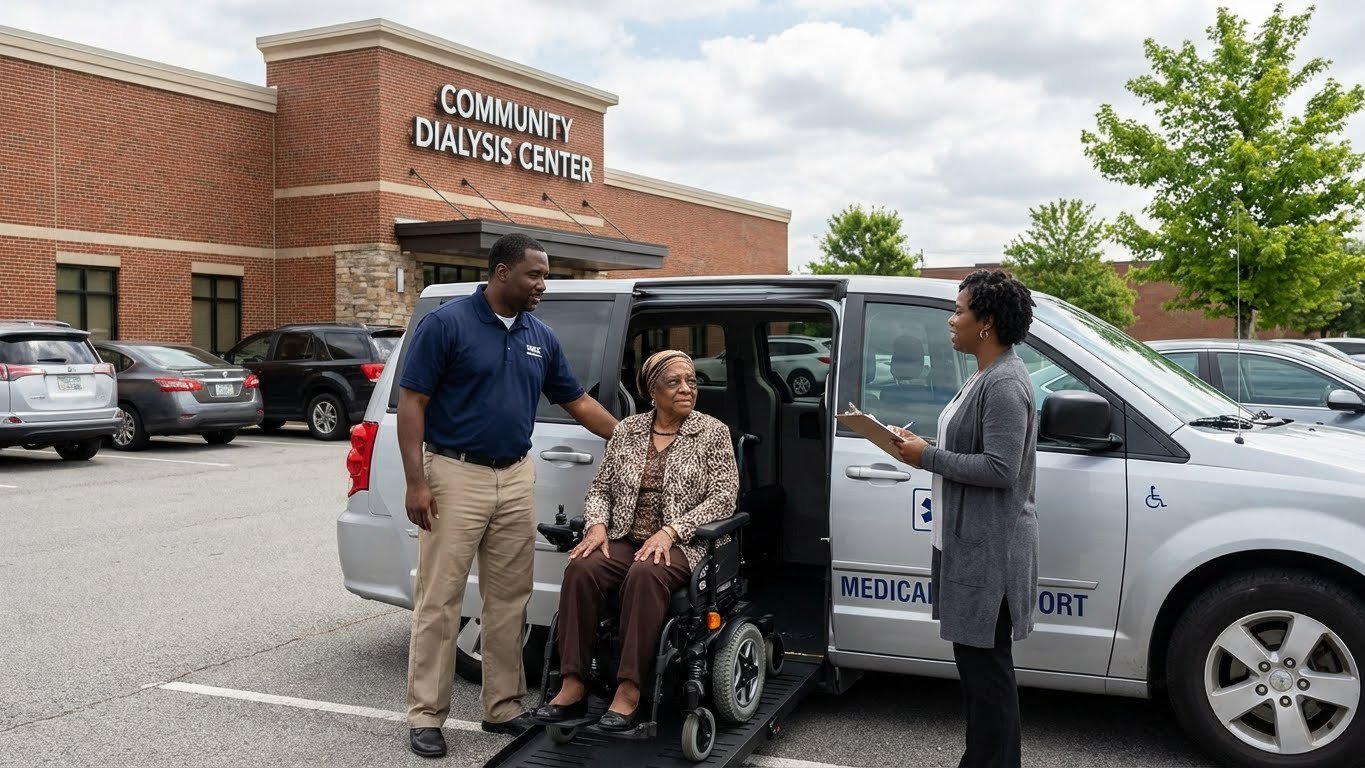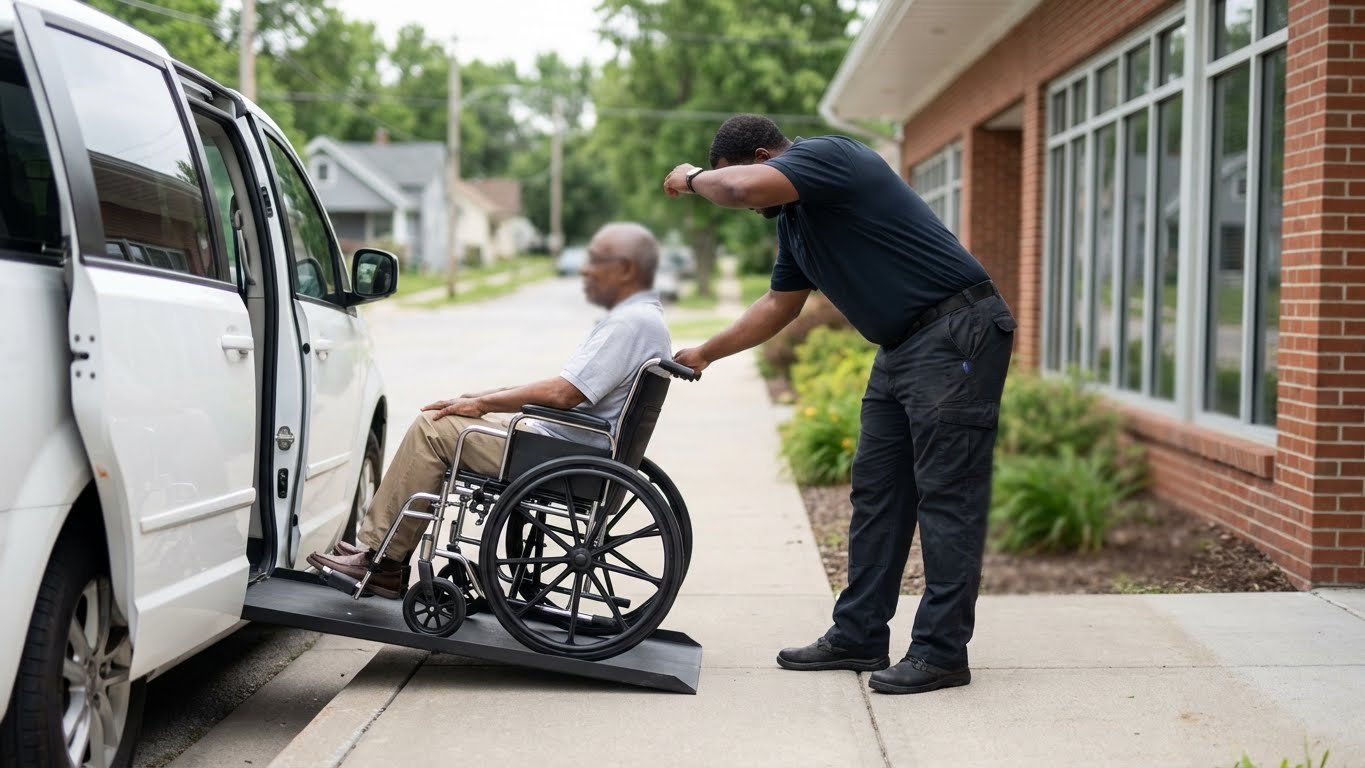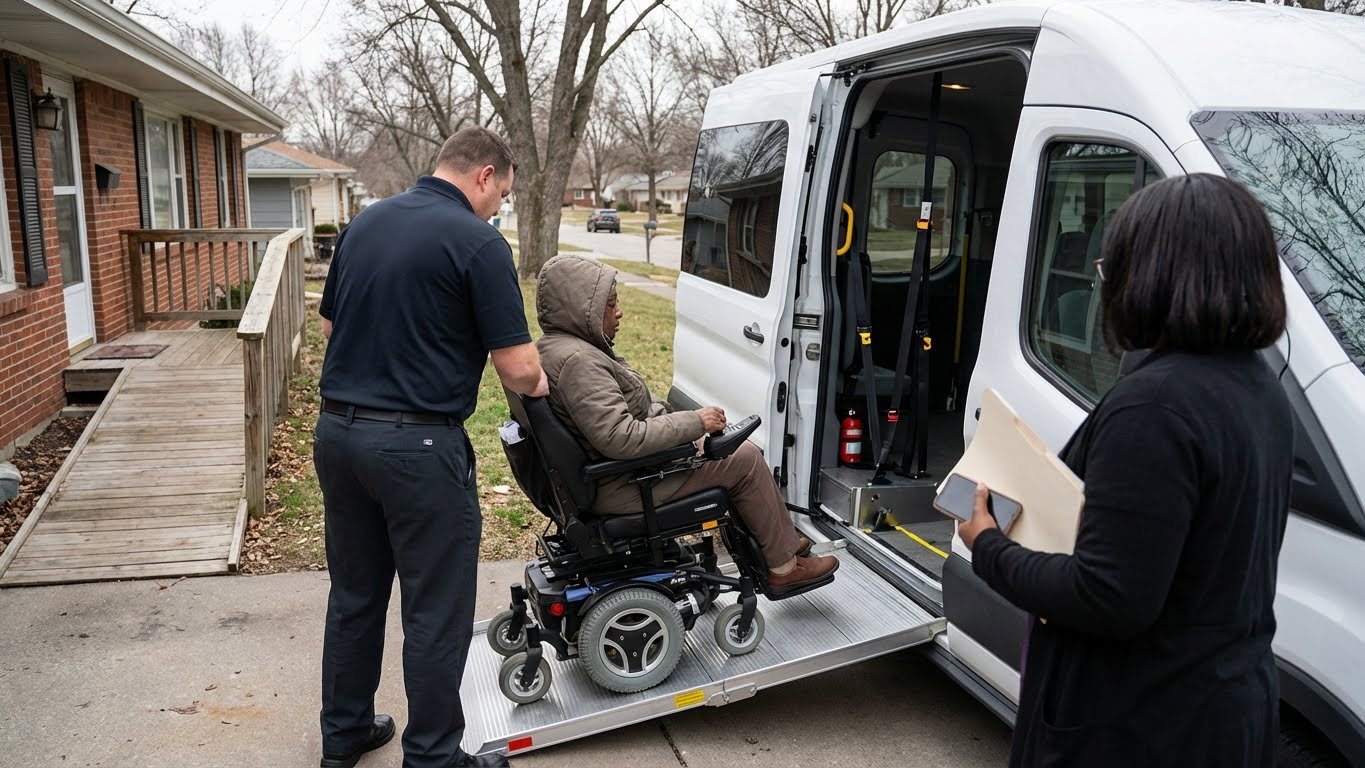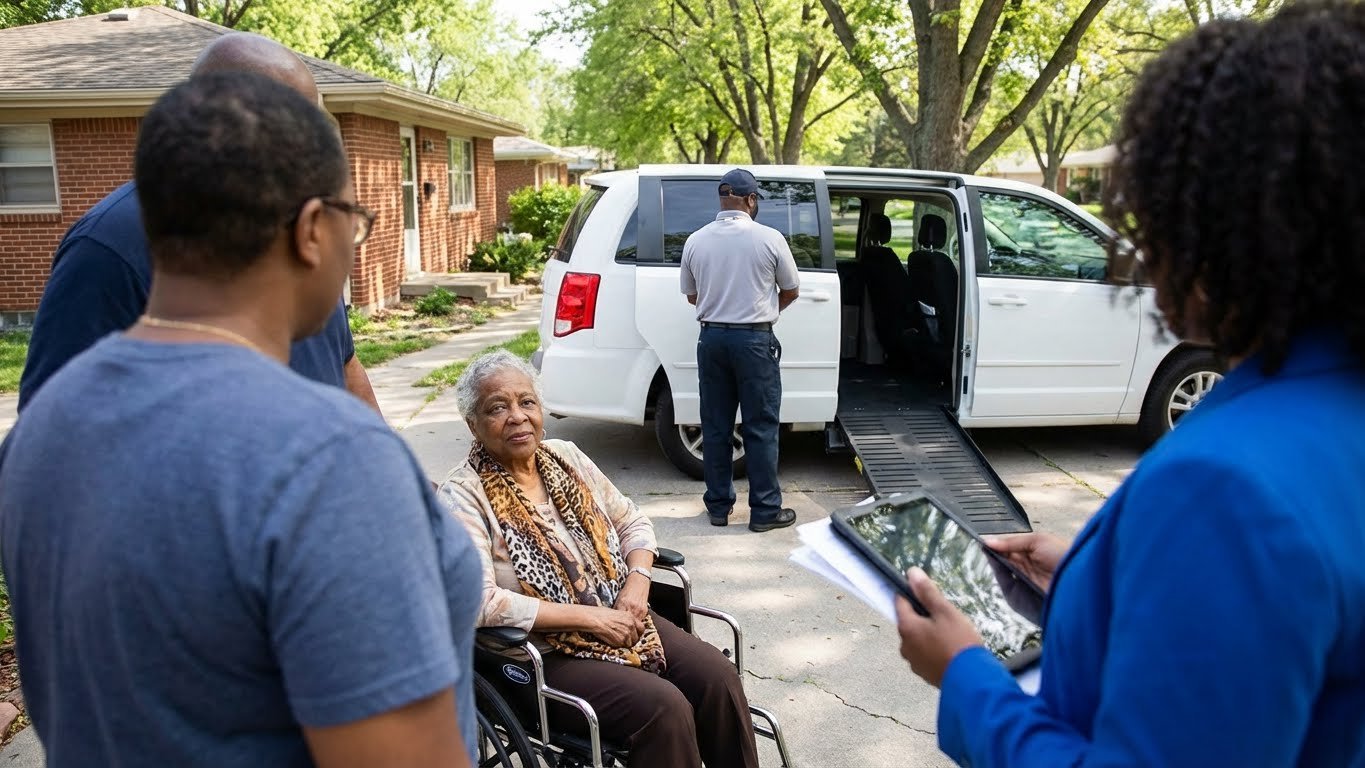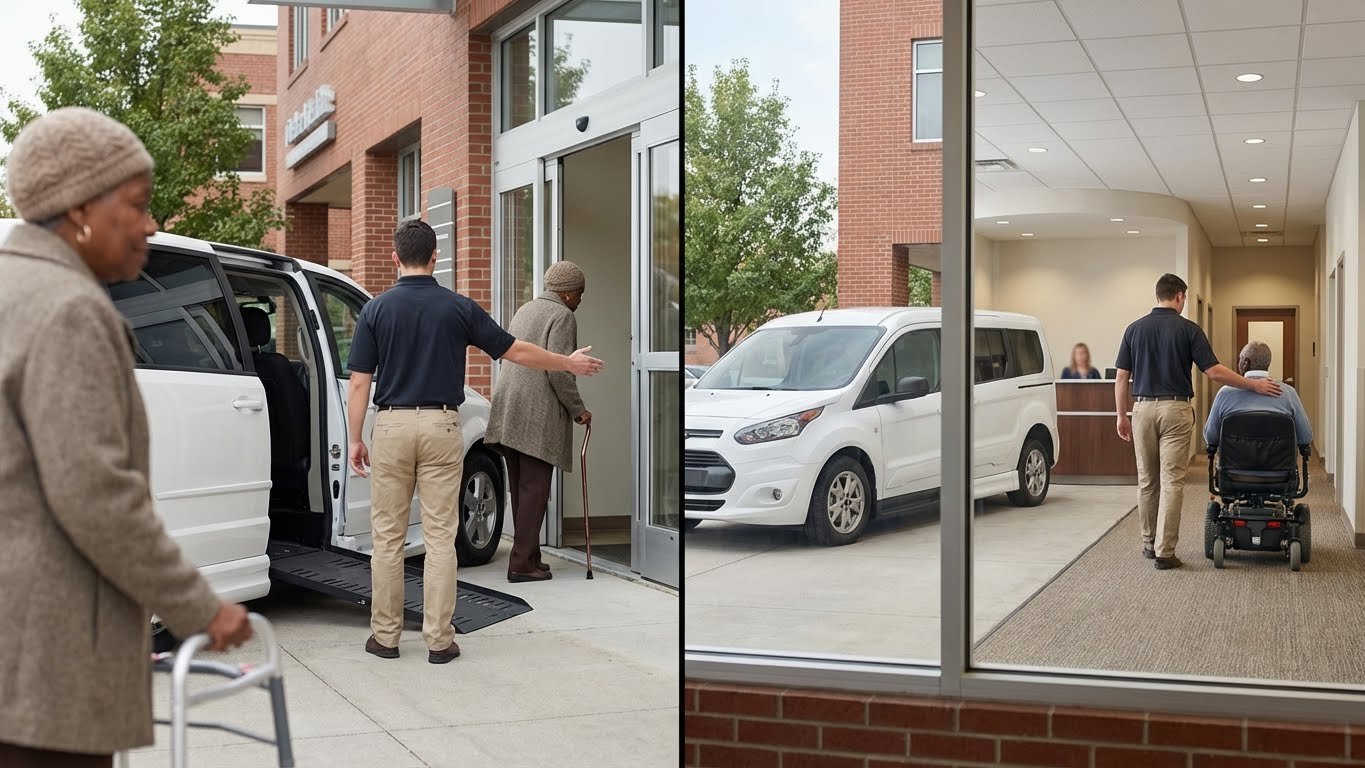
Medical transportation is often measured by punctuality alone. While being on time is important, speed without compassion can cause harm—especially for seniors, individuals with disabilities, and patients managing chronic conditions.
Compassionate medical transportation recognizes that how a patient feels during the journey directly affects their healthcare experience.
The Problem with Rushed Medical Transportation
When transportation feels hurried or impersonal, patients may experience:
- Increased anxiety before appointments
- Fear of falling or being rushed
- Emotional distress or embarrassment
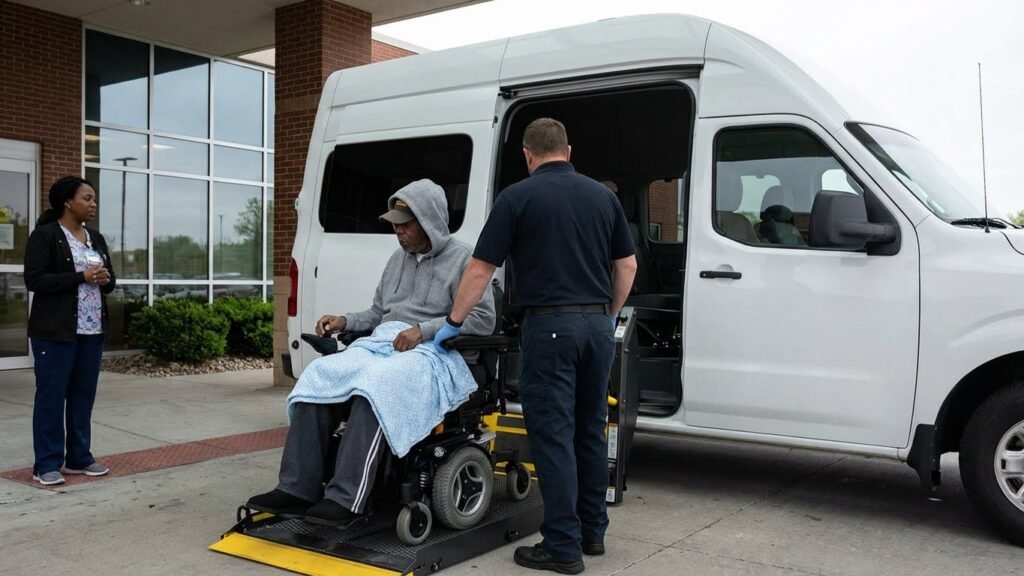
- Physical strain during boarding and exiting
For vulnerable patients, rushing can turn a routine appointment into a stressful ordeal.
Why Compassion Improves Patient Outcomes
Compassionate transportation allows patients to:
- Move at a safe, comfortable pace
- Feel respected and understood
- Arrive calmer and more prepared
- Maintain dignity during vulnerable moments
When patients feel supported, they are more likely to attend appointments consistently and engage in their care.
Speed vs Support: What Patients Really Need
Most medical patients are not in emergencies—they need steady, predictable, and patient-centered care. Compassionate drivers focus on:
- Safe transitions, not rushing
- Clear, calm communication
- Emotional reassurance when needed
This approach prioritizes health, not just efficiency.
Final Thoughts
Being five minutes faster is never worth making a patient feel unsafe or distressed. Compassion in medical transportation protects dignity, builds trust, and improves the overall healthcare experience.